Ayurvedic Arthritis & Joint Pain Program at Elephant Pass
Our Arthritis & Joint Pain Program is designed for guests living with persistent joint stiffness, pain, or reduced mobility who want a gentle, natural way to support their joints in an authentic Ayurvedic setting in Kerala. Ayurveda has long described joint disease under concepts such as Sandhigata Vata (Vata lodged in the joints), where pain, stiffness, and crepitus (cracking sounds) arise from disturbed Vata and accumulated ama in the joint spaces.
At Elephant Pass, this traditional understanding is applied through a doctor‑led, personalised combination of Panchakarma, local therapies, and lifestyle support to ease discomfort, improve movement, and support long‑term joint health.
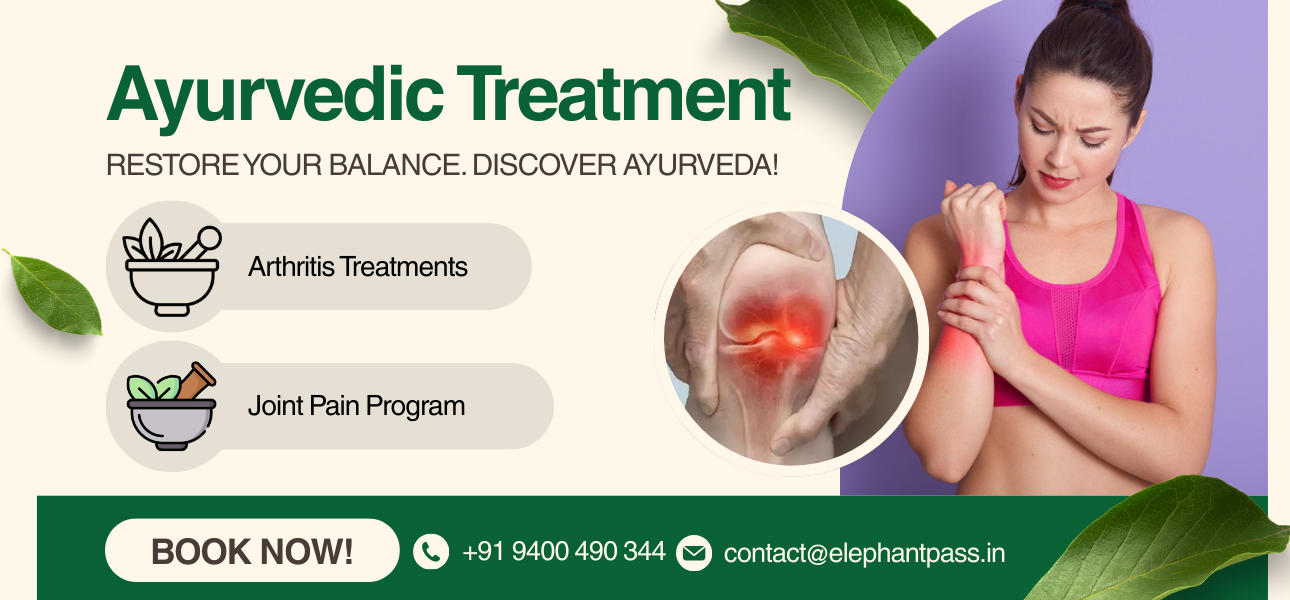
This program is suitable as supportive care for:
What This Program Addresses
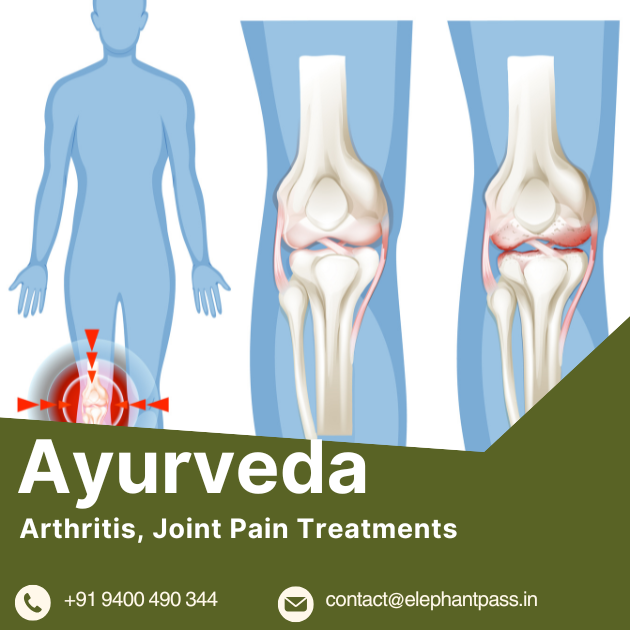
Osteoarthritis of the knees, hips, or spine (wear‑and‑tear, age‑related changes).
Early or stable rheumatoid arthritis (RA) in remission or low activity, as a complement to rheumatology care—not an emergency or replacement.
Cervical and lumbar spondylosis (neck and lower back degeneration with stiffness and recurring pain).
General joint stiffness and reduced flexibility from long‑term sedentary lifestyle, strain, or early degenerative changes.
This program is not meant for acute trauma (fresh fractures, ligament tears), hot swollen joints needing immediate medical attention, or uncontrolled RA flares.
Ayurvedic View of Arthritis & Joint Pain
In Ayurveda, many chronic joint problems are understood as forms of Sandhigata Vata—a condition where aggravated Vata accumulates in the joints, often together with ama (undigested, toxic residue).
Key points in this view:
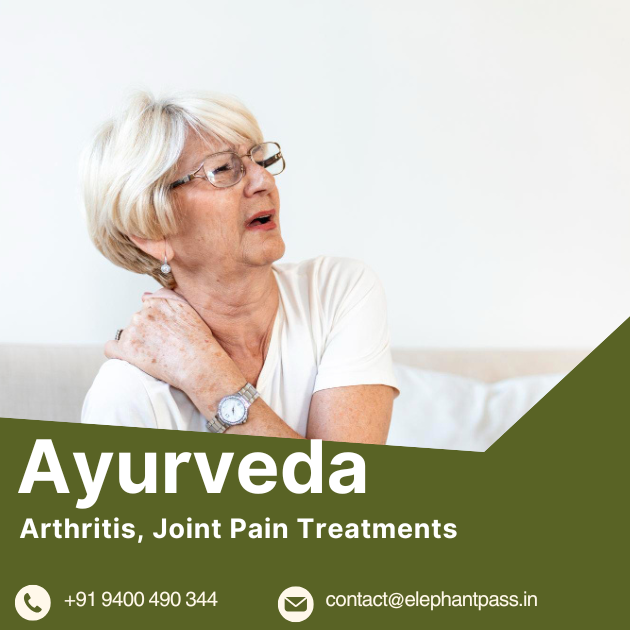
Vata dosha, when disturbed by age, overuse, injury, or dryness, tends to lodge in the joints, causing pain, cracking, and limited movement.
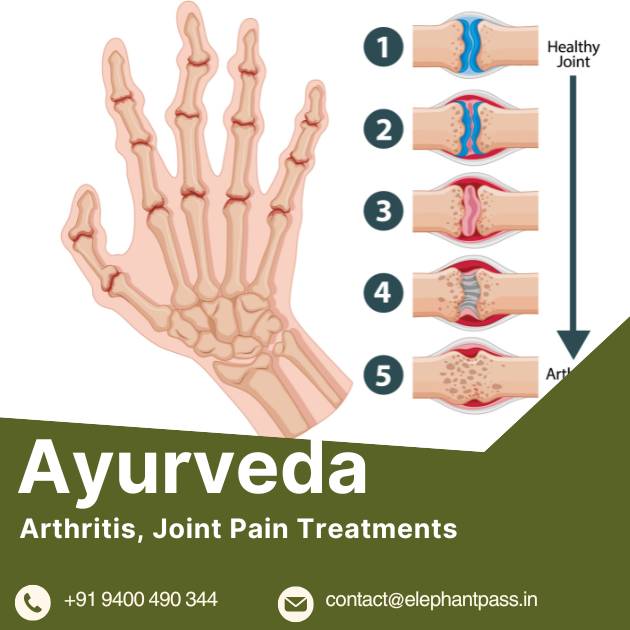
When ama is present (from poor digestion and lifestyle), it mixes with Vata and Kapha in the joint spaces, leading to swelling, stiffness, and deformity over time.
Classical granthas like Charaka Samhita and Sushruta Samhita describe Vata disorders of the joints and recommend a combination of shodhana (purification)—especially Basti—and snehana/svedana (oiling and fomentation) to relieve symptoms and slow progression.
The aim is not only to soothe pain short‑term, but to calm Vata, clear ama, lubricate the joints, and support tissues over time.
Stay & Facilities
Ayurvedic Treatments Used in This Program
Your exact plan is created by the Ayurvedic doctor after assessing your age, strength, digestion, dosha balance, and medical reports. Common therapies include:
1. Abhyanga (Medicated Oil Massage)
Full‑body or local oil massage using warm medicated oils to lubricate joints, relax muscles, and calm Vata.
Helps improve circulation and prepares the body for deeper treatments such as Pinda Sweda or Basti.
2. Kizhi (Pinda Sweda) & Patra Pinda Sweda
Kizhi/Pinda Sweda: Warm herbal boluses (poultices) filled with medicated powders or rice, applied in rhythmic strokes over affected joints and muscles.
Patra Pinda Sweda: Boluses filled with herbal leaves cooked in oils, especially useful for stiffness and pain.
These fomentation therapies help reduce stiffness, ease pain, and support flexibility by combining heat, herbs, and massage.
Stay & Facilities
Ayurvedic Treatments Used in This Program
All of this is done gradually, according to your comfort and response; the aim is a sustained easing of symptoms, not aggressive manipulation.
3. Basti (Medicated Enema Therapy)
Considered a cornerstone for Vata disorders, Basti involves administering herbal decoctions or oils via the rectum to act systemically on Vata and the lower back/hip region.
Classical sources and modern Ayurvedic practice use Basti extensively in conditions like osteoarthritis and spondylosis to improve mobility and reduce pain.
4. Virechana (Purgation) When Pitta/Ama Is High
In cases with clear signs of inflammation, heat, or strong ama, gentle Virechana (purgation) may be advised to clear Pitta and toxins from the digestive tract before or alongside local joint treatments.
5. Local Lepanas, Steam, and Joint‑Friendly Yoga
- Local lepanas – application of herbal pastes over joints to soothe pain and swelling.
- Steam therapy – local or full‑body steam to relieve stiffness and enhance circulation.
- Simple strengthening/stretching yoga – joint‑friendly practices to support flexibility, posture, and muscle balance, adapted to your pain level and mobility.
Stay & Facilities
Expected Changes Over Time
Every person is different, but guests who stay for 2–3 weeks of focused joint‑care often report:
Reduced stiffness, especially in the morning and after rest.
Improved ease of movement—walking, climbing small steps, sitting and rising become more comfortable.
Less pain and heaviness in the affected joints, with better joint warmth and flexibility.
A general sense of lightness, better sleep, and improved mood, as pain decreases and the body feels more supported.
Results are usually best when post‑retreat advice on home exercises, diet, and routine is followed consistently.
Suitability & Limits
Who This Program Is Ideal For
This Program May Be Right for You If:
People with mild to moderate osteoarthritis (knee, hip, spine) who want to reduce stiffness and support daily function.
Guests with stable rheumatoid arthritis in remission or low activity, seeking additional symptom relief and lifestyle support, while continuing rheumatology care.
Those with cervical/lumbar spondylosis, chronic neck or low‑back pain, or general age‑related joint stiffness.
Individuals who are ready to commit 2–3 weeks to therapies, diet, and rest in a retreat setting.
When This Program Is Not Appropriate Alone
Acute, hot, red, severely swollen joints needing urgent evaluation.
Suspected septic arthritis or acute gout flare.
Uncontrolled rheumatoid arthritis or severe systemic disease needing close rheumatology supervision.
Immediately post‑surgery or in cases of unstable fractures.
Ayurveda for arthritis at Elephant Pass is intended as a complementary, supportive approach, not a substitute for orthopaedic or rheumatology care. Guests are encouraged to maintain contact with their primary doctors and to share medical reports with our Ayurvedic team.
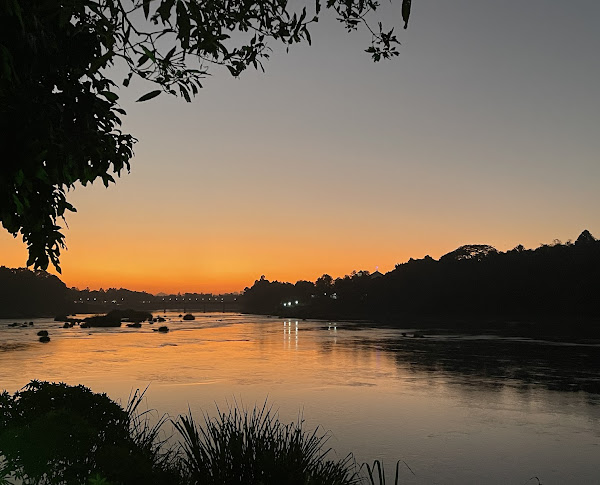

The Riverside Environment
How Elephant Pass Supports Joint Health
At Elephant Pass Ayurveda & Yoga Retreat, arthritis and joint‑care stays are planned to make it easier for you to move, rest, and heal:
Doctor‑Led, Tailored Combinations
The Ayurvedic doctor assesses your joint condition, X‑rays or medical reports (if available), dosha state, age, and digestion.
They then choose a combination of:External therapies (Abhyanga, Kizhi, Patra Pinda Sweda, Lepana).
Internal therapies (Basti, mild Virechana) where appropriate.
Gentle yoga, breathing, and relaxation tailored to your pain and mobility.
A Campus That Supports Movement
The retreat layout, riverside paths, and quiet surroundings create a gait‑friendly environment where you can walk short distances safely.
You’ll receive simple, practical exercise guidance—how to sit, stand, move, and stretch in ways that protect your joints rather than strain them.
Joint‑friendly yoga sessions focus on slow, controlled movement, breath, and alignment, not extreme postures.
Sattvic food, proper rest, and a calm routine round out the program, addressing systemic inflammation and Vata aggravation from multiple angles.
Arthritis & JOINT PAIN FAQ
Frequently Asked Questions
Can Ayurveda cure arthritis?
Ayurveda generally talks about managing and slowing the progression of arthritis, reducing pain and stiffness, and improving function, rather than promising a complete cure—especially for degenerative conditions like osteoarthritis. Classical texts discuss making Vata disorders “sukha sadhya” (manageable) or “yapya” (requiring ongoing care), not always completely reversible. At Elephant Pass, our aim is to relieve symptoms, support mobility, and improve your quality of life as part of a long‑term joint‑care plan.
How long do I need to stay for joint treatment?
For meaningful change, we usually recommend at least 14 days, and 21 days is often ideal for chronic arthritis and spondylosis. This allows time for:
Assessment and preparation (early days)
Regular joint therapies and Panchakarma procedures (mid‑stay)
A recovery phase with guidance for continuing at home (final days)
Shorter stays can provide some relief, but deeper, longer‑standing issues often need more time.
Will I have to stop my current medicines?
No. You should not stop any prescribed medicines on your own. Our Ayurvedic doctor will design your program around your existing treatments and may suggest lifestyle and herbal support that can work alongside them. Any changes to painkillers, DMARDs, or other medications should always be made by your rheumatologist or orthopaedic doctor.
Is Panchakarma necessary for every arthritis guest?
Not always. While Panchakarma procedures like Basti and Virechana are highly valued for Vata and ama‑related joint conditions, they are only used when your age, strength, digestion, and medical status make them appropriate. Some guests benefit primarily from external therapies, diet, and gentle exercise; others receive a full Panchakarma sequence. The decision is made individually after consultation.
I have knee pain but no clear diagnosis—can I still come?
Yes, many guests arrive with general knee or back pain without a confirmed diagnosis. Ideally, you should bring recent imaging or reports if available. Our doctor will assess your symptoms, mobility, and dosha status and then suggest a safe program to reduce pain, improve movement, and guide you toward longer‑term joint care, while encouraging appropriate medical evaluation if something serious is suspected.
Start with a Free Ayurvedic Doctor Consultation
If you’re living with arthritis, joint pain, or stiffness and want to understand how Ayurveda at Elephant Pass could support you, the best place to begin is a free Ayurvedic doctor consultation.
Our doctor will review your health story, current medications, and mobility level, explain what is realistically possible with Ayurvedic joint‑care, and recommend a stay length and treatment plan suited to your condition.
Medical Disclaimer – All Ayurvedic consultations and treatments at Elephant Pass are provided by qualified Ayurvedic doctors as part of traditional Ayurvedic medical practice. The information on this page is for general awareness about our services and does not replace a personal consultation, diagnosis, or treatment plan from our doctors or your other healthcare providers. Always discuss your individual health condition, current medications, and treatment options directly with a qualified doctor before making medical decisions or changing any ongoing treatment.
Posted onVerified Elephant Pass Ayurvida and Yoga Centre Elephant Pass Ayurvida and Yoga Retreat is a calm, relaxed resort in a beautiful setting. Don't expect to see any elephants, they're a little further up the road. The staff were very helpful. My friend and I stayed for two nights (we were in transit at the time) and practiced Yoga in the morning and also took on a relaxing full body massage. The rooms are basic but adequate. As hungry cyclists we would have preferred more food options with the meals (don't expect a full on buffet) but the staff did make an effort to supply some addional requested items for our dietary needs. We booked late and all in all this was a nice quiet unfussed place to stay with beautiful sunsets thrown in too.Posted onVerified A place with a Soul My stay at Elephant Pass was a very calm and grounding experience. Life here follows a natural and gentle daily rhythm that quickly feels comfortable. The position of the building itself is just perfect: while it is hot, there is a natural shadow and you can stay freely out of your room. At the same time you can e joy both - the morning and the afternoon sun for sunbathing. In the morning wake up to birds singing, with no traffic or noise, only greenery and the river nearby. The day starts with morning yoga. The teacher is very well educated, with a strong theoretical background, and always available for questions. She explains the body, breathing and yoga principles in a clear and thoughtful way, which adds a lot of depth to the practice. After yoga, there is time for a short walk through the nearby village. The local people are kind, open and welcoming. Bringing small gifts or treats from your home country is a lovely idea and is always appreciated. Breakfast is served either indoors or in a gazebo by the river. You can quietly watch birds flying and singing while enjoying freshly prepared Ayurvedic food. The meals are simple, traditional and extremely fresh. Everything feels clean, safe and nourishing. As a sophisticated traveller I can confirm that. Later in the morning, the first treatment takes place. The therapist is gentle, attentive and professional, and the sessions are relaxing and comfortable. After some rest, lunch is served, followed by a second treatment later in the afternoon. In the evening, yoga focuses on relaxation, breathing and meditation. After dinner, the day naturally slows down, and you go to sleep early, falling asleep and waking up to the sounds of nature. The rooms are spacious, very clean and comfortable. Air conditioning works perfectly, and there is always hot water with good water pressure. Every evening, the entire property is gently fumigated with natural herbs, which keeps insects away. This makes outdoor dining comfortable, and during my ten-day stay I did not see a single insect in my room. The location is also convenient. The retreat is not far from the airport (Cochin) and the transfer is easy and not tiring. I truly believe this place has a soul. And its soul is the people who work here! Their warmth, care and presence are what make Elephant Pass a special and meaningful place to stay.Posted onVerified A great experience Staying at the elephant pass resort was an unforgettable experience Accommodation food treatments and professional people quite amazing. I just wish I could have stayed longer. This place is a special gem. Thank youPosted onVerified Worth the journey Amazing location. Epitomises the term ‘God’s own country’ perfectly. Fantastic massage and treatment options. Good vegetarian food. Extremely helpful and supportive staff. Highly recommend the property for a break to recharge your batteries.Posted onVerified Positive and healthy We had wonderful experience here- staff super professional and warm but discreet/excellent Ayurvedic treatments and doctor- family vibe with kind and incredibly efficient -Near airport- peaceful by river - simple and easy organization- yoga master knows his stuff- I advise a little practice at home before starting yoga there - I went without practice for ages so very stiff! Would stay longer next time- the treatments were so good- best ever! People adorable ???? thank you ????????Posted onVerified Relax and disconnect in tropical paradise I spent one week at Elephant Pass and thoroughly enjoyed my stay. The location is absolutely stunning, set along the Periyar River, and offers a truly peaceful and serene atmosphere. The resort grounds are beautifully maintained and enhance the sense of calm throughout the property. What truly made my experience special was the staff. Everyone was exceptionally kind, friendly, and welcoming, and they went out of their way to make my stay memorable. I felt deeply relaxed and rejuvenated after my Ayurvedic treatments, and I appreciated that the doctor checked in on me almost every day. The food was another highlight—delicious, varied, and full of wonderful local flavors. While the rooms could benefit from some modernization, the overall experience more than made up for it. I would definitely recommend Elephant Pass for the warmth of the staff, the quality of the food, and the overall sense of care and tranquility.Posted onVerified مكان هادئ وجميل، خدمة رائعة وتجربة أيورفيدا مميزة تستحق الزيارة تجربة من أجمل ما يكون! المكان هادئ بشكل يخليك ترتاح من أول لحظة. الطبيعة حوالينك خيال، والنهر يعطي إحساس رايق وطاقة إيجابية. العاملين محترمين جدًا وتعاملهم راقٍ ويهتمّون بكل التفاصيل. جلسات الأيورفيدا كانت مريحة ومفيدة بشكل كبير، والأكل صحي ولذيذ. الجو العام كله يساعد على الاسترخاء وتجديد الطاقة. باختصار: مكان يستحق الزيارة وبقوة، وراح أرجع له أكيد.Posted onVerified Wonderful Ayurveda & Yoga experience at Elephant Pass Resort We had 11 days at Elephant Pass next to the holy river Peribavour with daily Ayurvedic treatments, massage and yoga morning and night. We woke up every morning with stunning birdsong and running squirrels in the lovely garden. Our yoga teacher was brilliant. All staff very kind, professional and service minded. The massage and treatments were great. Food all together vegetarian and Indian was a true experience. We can strongly recommend a stay at Elephant Pass.Posted onVerified Wonderful , serene , peceful escape to stay .. very rare at this price !! Location and atmosphere was serene very peaceful place , staff is exceptional , food is pure veg and tasty but not hard on your body Its a scenic ans serene place .. quiet .. therapist know how to massage acc to ayurveda ...Dr. Honey was there for time to time treatment related issues .. cant forget Vishnu , purshottam kaka ,chef, sentil therapist ,female therapist ,housekeeping staff were kind enough to take care of all your needs tried there level best ... at last but not least thanks to Mr. Stepehen ans Mrs Simi the owner couple were very courteous and hospitable ..rooms are value to money satyed in cottage category it had a small living space a bedrrom and a bathroom though no powder room but full value for money ... though its a open prperty but it was clean especially the bed linens and towel there was no foul smell and all clean ... i needed water as only prefer certain type so staff specially went to near airport place and brought it for me actually it took hrs to them to bringLoad more
Posted onTrustindex verifies that the original source of the review is Google. I had the pleasure of staying at this Resort which I had originally planned to stay at for five days but ended up extending for two weeks. The location of the Resort is right beside the beautiful river which every afternoon you can see the most exquisite sunsets. It’s quite relaxed and if you’re looking for a place that is amongst nature like I was this is the place to be. The rooms are spacious and clean, the staff are friendly and go out of their way to help you. They even hosted a cooking class and took us on day trips as well. I took a full board package while I was staying there and the food was absolutely delicious and also they gave a large variety of different dishes. The only downside to this place would be that the Wi-Fi was very slow so maybe keep that in mind if that is something that’s really important to you. But in all it is a fantastic place to stay.Posted onTrustindex verifies that the original source of the review is Google. We stayed for 17 nights. We signed up for the rejuvenating package of two daily treatments. All meals and herbal drinks. On site doctors visits.Two sessions of daily yoga and meditation. We enjoyed the food. The team led by Thomas are great, nothing is too much trouble. My therapist Nimisha was gentle and professional. Dr Sara helped to calm my anxious husband. When we arrived we were stressed from a difficult year having moved house. After a week our health mentally and physically improved. We met lovely people and we felt part of a warm caring family. We loved the river and peaceful surroundings, where the many birds came, the fish jumped and the locals fished and bathed in the holy Perivar river. We really slowed down. We had a cookery demonstration a typical buffet meal served on a palm leaf. We also had a couple of trips to St Thomas Church, a temple in the forest and a longer road trip to Fort Cochin. We would thoroughly recommend this place to restore peace and vitality into your life. My skin, hair and nails are glowing first time in ages. My husband seems calmer and healthier. He celebrated his 76 th birthday and we had a lovely cake and small party. A big thanks to Thomas the manager for sorting out everything. Dr Sara for starting and monitoring our health. Dr Archanaraj for the yoga particularly the breathing exercises. Saneesh for the delicious food. Saratha for the gentle service. Pushottsma for his maintenance. Nimisha for my treatments, Shinto for collecting flowers and administering my husband’s treatments. Vishnu for accompanying us out to the bank. The owners for a their attention.Posted onTrustindex verifies that the original source of the review is Google. I had the great pleasure of staying at elephant pass resort. It was a fabulous experience in fantastic calm and beautiful surroundings The food was so tasty varied and vegetarian cooked with imagination. The treatments were given so professionally and oh so wonderful. There were two knowledgeable and most helpful doctors on hand. The whole experience amazing and I enjoyed every moment. Thank youPosted onTrustindex verifies that the original source of the review is Google. A serene and quiet place having a beautiful riverside and good hospitality. You too can enjoy good sun set in the eveningPosted onTrustindex verifies that the original source of the review is Google. I recently did a 3 day retreat at this resort and I must say it was fabulous. The resort is situated at the most beautiful serene location. I had a very relaxing and rejuvenating stay. The food was amazing, the staff was exceptionally warm and helpful, special shout out to the sever Mr Shrey (sorry if I am mis-spelling his name), the ayurvedic treatment and yoga was super relaxing both mentally and physically. Highly recommend this place.Posted onTrustindex verifies that the original source of the review is Google. Amazing location. Epitomises the term ‘God’s own country’ perfectly. Fantastic massage and treatment options. Good vegetarian food. Extremely helpful and supportive staff. Highly recommend the property for a break to recharge your batteries.Posted onTrustindex verifies that the original source of the review is Google. Very efficient and personalised experience. Dr. Sara was very helpful! Purshottam sir is very polite. Left the place much healthier and calmer!Posted onTrustindex verifies that the original source of the review is Google. Beautiful place and so close to nature , would love to come back againPosted onTrustindex verifies that the original source of the review is Google. I spent one week at Elephant Pass and thoroughly enjoyed my stay. The location is absolutely stunning, set along the Periyar River, and offers a truly peaceful and serene atmosphere. The resort grounds are beautifully maintained and enhance the sense of calm throughout the property. What truly made my experience special was the staff. Everyone was exceptionally kind, friendly, and welcoming, and they went out of their way to make my stay memorable. I felt deeply relaxed and rejuvenated after my Ayurvedic treatments, and I appreciated that the doctor checked in on me almost every day. The food was another highlight—delicious, varied, and full of wonderful local flavors. While the rooms could benefit from some modernization, the overall experience more than made up for it. I would definitely recommend Elephant Pass for the warmth of the staff, the quality of the food, and the overall sense of care and tranquility.Posted onTrustindex verifies that the original source of the review is Google. Very nice location with river pass, stay and accommodation are very pleasant..Load more

“Where You Can Meet Nature” – Tripadvisor Travellers’ Choice 2025 Ayurveda Resort in Ernakulam, Kerala
Our Location
Elephant Pass Resort, Behind Old Elephant Kraal, Kodanad, Ernakulam (Dist), Kerala – 683544
About Us
- Know Our Resort
- Doctor - Profile 1
- Doctor - Profile 2
- Certifications
- Reviews & Testimonials
- Contact
Call / Whatsapp
+91 9400 490 344
Email Us
contact@elephantpass.in
Wellness Packages
- Medical Tourism Overview
- 7 Day Quick Wellness
- 14 day Medical Intensive
- 21 Day Complete Transformation
- International Travel Planning
Stay & Experience
- Room Types & Accommodation
- Ayurveda Cuisine & Meals
- Daily Schedule
- Facilities & How to Reach
- Yoga & Meditation Programs
- Kerala Attractions & Itineraries
- Know Herbs & Ingredients
Condition Treatments
- Panchakarma & Detox
- Arthritis & Joint Pain
- Diabetes & Metabolism
- Stress Relief & Sleep
- Respiratory & Asthma
- Digestive Health & IBS
- Women's Health
- Men's Health & Fertility
- Rejuvenation & Anti-Aging
© 2026 Elephant Pass Ayurveda & Yoga Retreat, Kochi, Kerala. All Rights Reserved.