What Is Panchakarma?
Panchakarma is Ayurveda’s systematic cleansing and rejuvenation therapy. Instead of using very short, extreme detox diets, Ayurveda offers a carefully planned process that includes:
Preparation and softening of accumulated ama (toxic residue from poor digestion)
Gentle but powerful cleansing through five main procedures
A recovery phase to rebuild strength, digestion, and balance
Sushruta Samhita and Ashtanga Hridaya expand on these ideas, placing Panchakarma within the broader context of internal medicine and surgery, and emphasising that it must be tailored to the individual and supervised by a qualified Ayurvedic doctor.
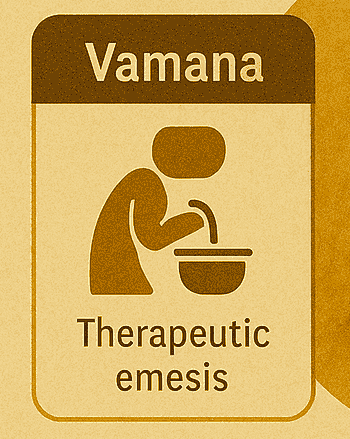
Vamana (Therapeutic Emesis)
Vamana is a doctor‑guided, controlled emesis (induced vomiting) procedure used mainly for Kapha‑dominant conditions.
In simple terms, Vamana helps clear:
Excess mucus and sluggishness from the upper body
Heavy congestion in the chest and sinuses
Kapha‑related stagnation that can contribute to fatigue, breathing discomfort, and some skin or respiratory issues
Charaka Samhita and Ashtanga Hridaya describe Vamana in detail, explaining which herbal preparations are used, who benefits from it, and how to prepare and recover from the procedure safely. It is not a random “purge” but a carefully dosed and supervised therapy.
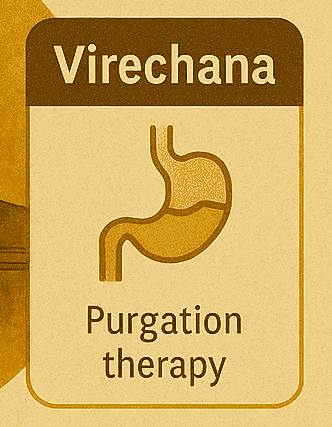
Virechana (Purgation Therapy)
Virechana is a herbal‑supported purgation that cleanses the middle digestive tract and is often used for Pitta‑dominant imbalances.
It can help with:
Acidity, burning sensations, and inflammation
Liver congestion and certain digestive issues
Some skin and inflammatory conditions linked to excess heat and toxins
Charaka Samhita explains Virechana in the Chikitsa Sthana, describing how herbs are chosen based on dosha and condition, and how the patient is prepared and cared for before and after. Sushruta Samhita also discusses Virechana within the context of internal disease treatment.
Because it strongly affects the digestive system, Virechana is always done under the guidance of an Ayurvedic doctor, with careful attention to diet and lifestyle.
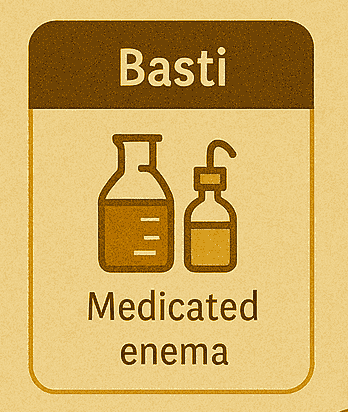
Basti (Medicated Enema Therapy)
Basti is the most widely used Panchakarma therapy and is often regarded as the cornerstone of Vata‑related treatment.
In simple terms, Basti involves:
The gentle introduction of medicated oils or herbal decoctions into the rectum
Targeting the large intestine and deeper tissues where Vata is closely connected
Its effects often include:
Easing joint stiffness, back pain, and Vata‑related discomfort
Improving bowel movements and supporting digestion
Calming the nervous system and promoting better sleep
Charaka Samhita and Sushruta Samhita devote detailed sections to Basti, listing different types of Basti and their indications for various diseases. Ashtanga Hridaya simplifies and systematises this information, making it accessible for modern Ayurvedic education.
Nasya (Nasal Therapy)
Nasya is the application of medicated oils or powders through the nose to cleanse and nourish the head and upper channels.
It is often used to help with:
Sinus congestion, heaviness in the head, and headaches
Certain neurological and mental health conditions connected with Vata and Kapha
Supporting clear thinking and a calm mind
Charaka Samhita and Sushruta Samhita describe Nasya in their Urdhvaanga (upper‑body) treatment sections, explaining how it clears the head and clears the subtle channels involved in breathing, thinking, and feeling.
Raktamokshana (Controlled Bloodletting)
Raktamokshana is a highly controlled, limited bloodletting therapy, used only in selected cases and under expert supervision.
It is traditionally used for certain Pitta‑dominant inflammatory or skin‑related conditions, where excess heat and toxins are concentrated in the blood.
Sushruta Samhita explains different techniques of Raktamokshana, including leech therapy and other small‑volume bloodletting methods, and notes strong cautions and contraindications. This is not a casual “blood‑cleanse” trend; it is a very specific, physician‑led intervention.
How Panchakarma Works: Simple Logic, Ayurvedic View
Even though Panchakarma appears quite traditional, its logic is surprisingly simple:
Ama builds up when the digestive fire (agni) is weak and diet and lifestyle are inappropriate.
Ama clogs the body’s channels, disturbs the doshas, and leads to sluggishness, heaviness, joint issues, and skin problems.
Panchakarma, with its preparation, cleansing, and recovery phases, helps clear ama, restore balance of doshas, and reignite agni.
The result is often:
A lighter body
A clearer mind
Better digestion and energy
Improved sleep and emotional balance
Modern wellness language often connects this to gut health, detox, and inflammation, but the classical Ayurvedic frame is dosha, agni, and ama—all concepts you’ve already met in the “What Is Ayurveda?” and “3 Doshas” pages.
Why Panchakarma Matters for Health
Over time, poor food choices, irregular routines, stress, and environmental factors can dull your digestive fire (agni) and result in ama—a sticky, toxic residue that clogs your body’s channels. This can lead to:
Persistent fatigue and low energy
Sluggish digestion, gas, constipation
Joint stiffness, heaviness, or mild arthritis‑like symptoms
Recurring skin issues such as acne, eczema, or dullness
A “foggy” feeling in the mind and disturbed sleep
Panchakarma is designed to:
Gently clear ama and support the body’s natural detox pathways
Reset the doshas—especially Vata, Pitta, and Kapha—so they perform their roles in digestion, movement, and structure more smoothly
Re‑ignite agni, so food is better digested and nutrients are better absorbed
Prepare the body and mind for deeper healing and long‑term well‑being
It’s not only for people who are “very sick.” Many guests choose Panchakarma as a preventive, seasonal reset—especially in the monsoon or winter in Kerala, when the climate naturally supports oil‑based therapies and gentle cleansing.
Chosen for fatigue, digestion, joint or skin issues, stress, sleep, or a seasonal reset.
When People Choose Panchakarma
For Chronic Fatigue and Low Energy
Chosen by people who feel constantly tired or “sluggish,” even after rest.
Helps restore natural energy and reduce heaviness in the body and mind.
For Digestive and Gut‑Related Issues
Helps long‑standing digestion problems like acidity, bloating, gas, or irregular bowel movements.
Clears ama and supports better digestion and absorption.
For Joint and Skin Concerns
Supports joint stiffness, mild arthritis‑like pains, and heaviness in the body.
Often used for skin issues such as eczema, acne, or psoriasis.
For Stress, Sleep, and Seasonal Reset
Chosen for chronic stress, anxiety, and disturbed sleep.
Serves as a seasonal or periodic reset, often as a 2–3 week retreat in Kerala, where the climate, oil therapies, simple food, and calm environment enhance the process.
How Panchakarma Is Practised at Elephant Pass
At Elephant Pass Ayurveda & Yoga Retreat, Panchakarma is offered as a doctor‑led, personalised healing system in a quiet riverside setting.
Here’s how it usually works for a guest:
Initial consultation with the Ayurvedic doctor:
- Assessment of your body type, Vata–Pitta–Kapha balance, health history, and current symptoms
- Discussion of your goals for Panchakarma and your medical background
Personalised Panchakarma protocol:
The doctor decides which of the five procedures (if any) are suitable for you and in what order.
The Poorvakarma phase (oiling, fomentation, and dietary preparation) is carefully planned.
The Panchakarma main procedures are scheduled with appropriate rest and support.
The Paschatkarma (recovery, food, herbs, and gentle routines) is built into the stay.
Environment and lifestyle:
- Simple, sattvic vegetarian food adjusted to your digestion and doshas
- A calm, green, riverside atmosphere that supports rest and emotional reset
- Yoga, meditation, and nature walks used to complement the physical cleansing
This is why Panchakarma at Elephant Pass is not just a “treatment package,” but a coherent experience that includes food, routine, therapies, and rest—all personalised to support your doshas and long‑term health.
The Two Supporting Phases: Poorvakarma & Paschatkarma
Panchakarma is not just about the five main procedures. It also includes two essential phases that prepare the body before cleansing and help it rebuild after: Poorvakarma (pre‑Panchakarma) and Paschatkarma (post‑Panchakarma).
1. Poorvakarma: Preparation
Before any of the five main therapies, the body is softened and prepared through:
Snehana (internal and external oiling):
- Consuming small, measured doses of herbalised ghee or oils
- Applying warm, medicated oils to the body
Svedana (fomentation or gentle heat):
Using warm herbal steam or fomentation to open the channels
Diet and lifestyle adjustment:
- Light, easy‑to‑digest foods
- Gentle routine, rest, and stress reduction
Charaka Samhita and Ashtanga Hridaya emphasise that Poorvakarma is essential for safe and effective Panchakarma. It helps loosen ama from the tissues and gently move it toward the digestive tract, so the five main procedures can work without overwhelming the body.
2. Paschatkarma: Recovery
After the main Panchakarma therapies, the body enters Paschatkarma, the recovery and rejuvenation phase.
This usually includes:
A gradual, gentle diet progression (initially very light, then slowly increasing in strength)
Adequate rest and a calm routine
Sometimes rejuvenating herbs (rasayana‑type) to support strength and immunity
Ayurvedic granthas warn that skipping or short‑circuiting Paschatkarma can weaken digestion and undo the benefits of the cleansing process. This is why Panchakarma is best done in a supportive environment like a retreat, where the entire rhythm of the day can be aligned with recovery.
Instructor FAQs
How to Become an Instructor
Do I need a certification to become an instructor?
Lorem ipsum dolor sit amet, consectetur adipiscing elit. Ut elit tellus, luctus nec ullamcorper mattis, pulvinar dapibus leo.
How much can I earn as a yoga instructor?
Lorem ipsum dolor sit amet, consectetur adipiscing elit. Ut elit tellus, luctus nec ullamcorper mattis, pulvinar dapibus leo.
Can I teach both online and offline?
Lorem ipsum dolor sit amet, consectetur adipiscing elit. Ut elit tellus, luctus nec ullamcorper mattis, pulvinar dapibus leo.
What kind of support will I get?
Lorem ipsum dolor sit amet, consectetur adipiscing elit. Ut elit tellus, luctus nec ullamcorper mattis, pulvinar dapibus leo.
How long does it take to start teaching?
Lorem ipsum dolor sit amet, consectetur adipiscing elit. Ut elit tellus, luctus nec ullamcorper mattis, pulvinar dapibus leo.
Can I decide my own schedule and fees?
Lorem ipsum dolor sit amet, consectetur adipiscing elit. Ut elit tellus, luctus nec ullamcorper mattis, pulvinar dapibus leo.
Start with a Free Ayurvedic Doctor Consultation
If you’re considering Panchakarma but unsure whether it’s right for you, your age, or your health history, start with a free Ayurvedic doctor consultation.
Our doctor will listen to your concerns, assess your doshas, digestion, and overall health, and then suggest whether a Panchakarma‑supportive retreat at Elephant Pass is suitable for you—and if so, what kind of program and duration would work best.

“Where You Can Meet Nature” – Tripadvisor Travellers’ Choice 2025 Ayurveda Resort in Ernakulam, Kerala
Our Location
Elephant Pass Resort, Behind Old Elephant Kraal, Kodanad, Ernakulam (Dist), Kerala – 683544
About Us
- Know Our Resort
- Doctor - Profile 1
- Doctor - Profile 2
- Certifications
- Reviews & Testimonials
- Contact
Call / Whatsapp
+91 9400 490 344
Email Us
contact@elephantpass.in
Wellness Packages
- Medical Tourism Overview
- 7 Day Quick Wellness
- 14 day Medical Intensive
- 21 Day Complete Transformation
- International Travel Planning
Stay & Experience
- Room Types & Accommodation
- Ayurveda Cuisine & Meals
- Daily Schedule
- Facilities & How to Reach
- Yoga & Meditation Programs
- Kerala Attractions & Itineraries
- Know Herbs & Ingredients
Condition Treatments
- Panchakarma & Detox
- Arthritis & Joint Pain
- Diabetes & Metabolism
- Stress Relief & Sleep
- Respiratory & Asthma
- Digestive Health & IBS
- Women's Health
- Men's Health & Fertility
- Rejuvenation & Anti-Aging
© 2026 Elephant Pass Ayurveda & Yoga Retreat, Kochi, Kerala. All Rights Reserved.